Distributed fiber optic sensing technology
/ technology
We use distributed fiber optic sensing (DFOS) to continuously monitor critical infrastructure and detect events across long distances.

.jpg)
How it works
Using distributed fiber optic sensing, Norsensor transforms existing fiber networks into continuous monitoring systems. Events are detected, analyzed, and delivered in real time for improved infrastructure awareness.

Detect
Fiber optic cables continuously capture vibrations and acoustic signals generated by activity along monitored infrastructure. This enables continuous sensing across long distances without deploying multiple field sensors.

Analyze
Advanced signal processing transforms raw sensing data into meaningful events and insights. Configurable detection algorithms help distinguish normal activity from conditions that require attention. This includes automatic incident detection for stopped vehicles and wrong-way driving.

Integrate
Detection events and analytics are delivered to existing operational systems through standard interfaces, enabling faster response and improved situational awareness.
System architecture
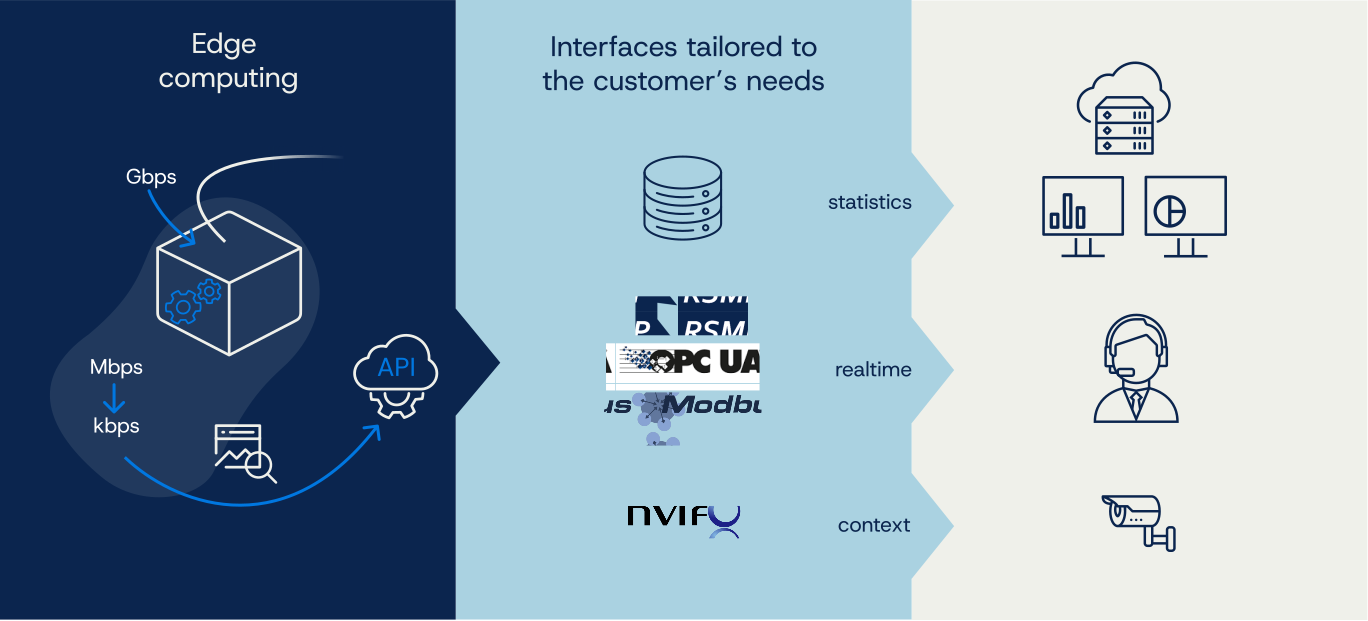
Norsensor's distributed fiber optic sensing architecture combines continuous field monitoring, intelligent event processing, and seamless system integration. The result is a scalable platform that delivers real-time infrastructure awareness across a wide range of applications.
Integration
Built to fit with existing infrastructure, our system connects via industry APIs, protocols, and interfaces to support real-time traffic monitoring applications such as queue detection.

API
Secure gRPC Protobuf with mTLS authentication, plus REST via gRPC gateway, give developers flexible, secure access to real-time data and alerts.
Existing systems
Seamless integration with SCADA, security, traffic management and operational platforms across roads, tunnels, power lines, borders and perimeters - fitting established workflows, not replacing them.
Protocols
The Norsensor system supports MODBUS, OPC UA, RSMP, dry contact, SMS, email, and ONVIF camera control, connecting to existing or new signage and systems.
Reliability & operations
Every meter of fibre is a sensing point, so our systems need far less hardware than traditional point sensors. Fewer devices, to install, power, and maintain, whether deployed on new fiber lines or existing fiber infrastructure.
The sensing fiber is entirely passive, carrying no electronics and requiring no power between sensing units. This reduces power infrastructure, minimises field failures, and supports a long, low maintenance lifespan even in harsh environments.

Technical documentation

